Biometrics in Financial Services
The banking and financial services industry is the largest enterprise adopter of biometric authentication technology. Banks use biometrics for mobile banking login (fingerprint and facial recognition), payment authorization (Apple Pay, Google Pay), phone banking verification (voice biometrics), ATM authentication (fingerprint and iris), and continuous fraud monitoring (behavioral biometrics). The financial sector's adoption is driven by the convergence of customer demand for convenience, regulatory requirements for strong authentication (PSD2 in Europe, similar frameworks globally), and the staggering cost of fraud — $10+ billion annually in the U.S. alone.
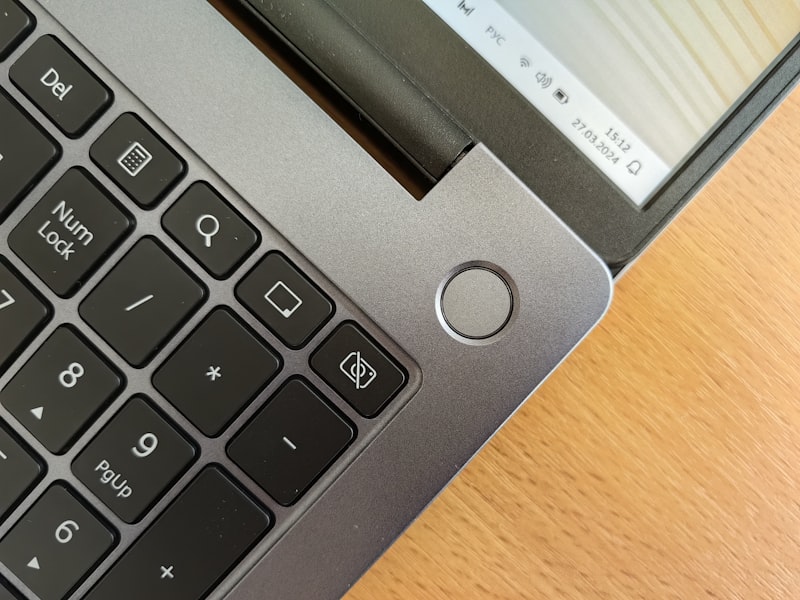
Banking Biometric Technologies
Mobile banking: Fingerprint and Face ID authentication for account access and transaction approval. Supported by passkey and FIDO2 standards.
Voice banking: Voiceprint verification for phone banking — replacing security questions with passive voice recognition.
Behavioral biometrics: Continuous monitoring of typing patterns, mouse movements, and device handling to detect account takeover. See signature authentication for a related behavioral approach.
For enterprise deployment guidance, see implementing biometrics.
The banking sector's adoption of biometric authentication has accelerated as mobile banking becomes the primary channel for most consumers. Voice authentication is now used by major institutions for telephone banking, where customers verify their identity by speaking a passphrase — the system analyzes vocal characteristics including pitch, cadence, dialect, and formant frequencies to confirm the caller's identity without requiring them to recite account numbers or answer security questions. This approach is far more secure than knowledge-based verification, which is vulnerable to social engineering and data breaches that expose personal details.
Behavioral biometrics represent the next frontier in banking security. These systems continuously monitor how a user interacts with their device — typing patterns, swipe gestures, screen pressure, and even the angle at which they hold their phone — to build a behavioral profile that runs silently in the background throughout a session. If the behavioral pattern suddenly changes (suggesting the device has been handed to someone else or taken over remotely), the system can trigger step-up authentication or lock the session entirely. Combined with FIDO2-compliant hardware tokens and passkey login flows, banks are building layered defense systems where biometrics serve as both the front door and the continuous surveillance inside. For organizations considering deployment, see our implementation guide.
Banking Biometrics in 2026: Regulation, Adoption, and Innovation
The biometrics market for banking and financial services reached approximately $10 billion in 2025 and is projected to grow at over 15 percent annually through 2035. Fingerprint recognition currently holds the largest technology share at 35 percent in financial applications, though facial recognition is growing fastest as banks embrace contactless customer onboarding and transaction verification. Retail banking leads adoption at 45 percent market share, but fintech and neobanks represent the fastest-growing segment as they build authentication infrastructure from scratch using modern biometric-first architectures.
Regulatory mandates are the primary acceleration force. The UAE Central Bank's directive requiring financial institutions to eliminate SMS and email one-time passwords by March 2026 triggered rapid biometric deployment across major banks including Emirates NBD, ADIB, and FAB. India's Reserve Bank announced similar authentication rule changes effective April 2026, affecting hundreds of millions of digital payment users. The Philippines' BSP Circular 1213 sets a June 2026 deadline for phishing-resistant authentication on high-risk transactions. These regulatory deadlines create urgency that transforms biometric authentication from a competitive differentiator into a compliance requirement.
Beyond regulatory compliance, banks are deploying biometrics to reduce fraud losses and improve customer experience. Biometric ATM authentication, voice verification for phone banking, and facial recognition for branch services are all moving from pilot programs to production deployments. The key challenge remains balancing security with inclusivity — ensuring that biometric systems work reliably across diverse populations while meeting accessibility requirements for customers with disabilities that may affect biometric enrollment.
Looking ahead, the convergence of biometric authentication with open banking APIs and real-time payment systems will create new requirements for seamless, invisible identity verification that operates at transaction speed without introducing friction that drives customers to competitors. Banks that invest in biometric infrastructure now are building the authentication foundation needed for the next generation of financial services, where identity verification becomes continuous rather than event-based and security operates in the background rather than interrupting the customer experience.
Key Facts: Biometric Authentication in Banking
- ✓ The banking biometrics market reached $10 billion in 2025, growing at 15%+ annually through 2035
- ✓ Fingerprint recognition holds 35% technology share in financial applications; facial recognition is growing fastest
- ✓ UAE Central Bank mandated OTP elimination by March 2026, triggering rapid biometric deployment
- ✓ Banks using FIDO2 biometric authentication report 80-95% reductions in account takeover fraud
- ✓ Over 90% of the top-100 global banks offer biometric authentication as of 2026
- ✓ The behavioral biometrics market is projected to reach $3.9 billion by 2027
| Banking Biometric Use Case | Primary Modality | Adoption Level | Key Benefit | Regulatory Driver |
|---|---|---|---|---|
| Mobile banking login | Fingerprint / face | Mainstream (90%+) | Convenience + phishing resistance | PSD2, RBI, BSP |
| Payment authorization | Fingerprint / face | Mainstream | Transaction speed + fraud reduction | PSD2 SCA |
| Phone banking verification | Voice biometrics | Growing (40%+ major banks) | Replaces security questions | KYC regulations |
| ATM authentication | Fingerprint / iris | Emerging (select markets) | Card-less access, fraud prevention | National ID programs |
| Customer onboarding (KYC) | Facial recognition + liveness | Growing rapidly | Remote account opening | AML/KYC directives |
| Continuous session monitoring | Behavioral biometrics | Early adoption | Real-time fraud detection | Fraud prevention mandates |
Biometric Customer Onboarding and Digital KYC
One of the most transformative applications of biometrics in banking is digital customer onboarding — the process of verifying a new customer's identity remotely to open an account without visiting a branch. Traditional KYC (Know Your Customer) processes require in-person document verification, which limits access for customers in remote areas and creates significant operational costs for banks. Biometric-powered digital KYC uses facial recognition matched against a government-issued ID photo, combined with liveness detection to confirm the person is physically present rather than using a photo or video replay.
The technology has matured rapidly. Leading KYC platforms now achieve document verification accuracy above 99% and liveness detection rates exceeding 99.5%, meeting the accuracy thresholds required by financial regulators in most jurisdictions. The Financial Action Task Force (FATF) recognizes digital identity verification — including biometric-based approaches — as capable of meeting international anti-money laundering standards when implemented with appropriate controls. This regulatory green light has accelerated adoption, with neobanks like Revolut, Monzo, and N26 building entirely around biometric-first onboarding, and traditional banks investing heavily to match that digital-first experience.
Fraud Prevention: How Biometrics Reduce Banking Losses
The financial impact of biometric authentication on banking fraud is substantial and well-documented. Account takeover (ATO) fraud — where criminals gain access to legitimate customer accounts — cost U.S. financial institutions billions of dollars a year. Banks that deployed FIDO2-compliant biometric authentication report 80-95% reductions in ATO incidents because biometric credentials cannot be phished, purchased on dark web marketplaces, or guessed through credential stuffing attacks.
Voice biometrics have proven particularly effective in combating call center fraud, where social engineering attacks target phone banking representatives. When voiceprint verification replaces security questions, the caller's identity is confirmed within the first few seconds of conversation through passive voice analysis — eliminating the attack vector entirely. Nuance Communications (now part of Microsoft) reported that its banking voice biometric customers experienced an average 90% reduction in phone channel fraud after deployment.
Behavioral biometrics add a continuous monitoring layer that catches fraud that initial authentication might miss. If a customer authenticates legitimately but then hands their phone to a fraudster, or if malware takes remote control of a session, the behavioral biometric system detects the change in interaction patterns — different typing rhythms, unfamiliar swipe gestures, atypical navigation paths — and triggers step-up authentication or session termination. This capability is especially valuable for high-value transactions where even a brief period of unauthorized access can result in significant losses. For organizations evaluating deployment, our implementation guide covers the technical planning process.
Global Regulatory Landscape for Banking Biometrics
The regulatory environment for biometric authentication in banking is tightening worldwide, creating both compliance obligations and competitive opportunities. The EU's PSD2 Strong Customer Authentication requirement (operationalized through the European Banking Authority's RTS on SCA and CSC) mandates multi-factor authentication for electronic payments using at least two of three factors: knowledge, possession, and inherence (biometrics). U.S. supervised institutions are also subject to the FFIEC Authentication and Access to Financial Institution Services and Systems Guidance, which requires layered, risk-based authentication for high-risk transactions, and to PCI DSS v4.0 Requirement 8 on cardholder-data-environment authentication. Banks that invested early in biometric infrastructure found PSD2 compliance straightforward; those that delayed faced costly rushed implementations.
Emerging regulations are even more prescriptive. The UAE Central Bank's directive eliminating SMS and email OTPs by March 2026 explicitly requires phishing-resistant authentication — a standard that biometrics naturally satisfy. India's RBI mandates affecting digital payment authentication took effect in April 2026. The Philippines' BSP Circular 1213 set a June 2026 deadline for phishing-resistant authentication on high-risk transactions. These cascading regulatory deadlines are transforming biometric authentication from a competitive differentiator into a baseline compliance requirement across global banking markets.
Frequently Asked Questions
Q: Which banks use biometric authentication?
Nearly all major banks now use biometric authentication. In the U.S., JPMorgan Chase, Bank of America, Wells Fargo, and Citibank support fingerprint and facial recognition for mobile banking. HSBC and Barclays use voice biometrics for phone banking. In Asia, DBS Bank, ICBC, and HDFC Bank have deployed biometric ATMs. By 2026, over 90% of top-100 global banks offer some form of biometric authentication to their customers.
Q: Is biometric banking safe?
Yes. Biometric banking authentication is significantly safer than password-based alternatives. Biometrics cannot be phished, guessed, or shared. Banks using FIDO2-compliant biometric authentication report 80-95% reductions in account takeover fraud. On-device biometric processing means your fingerprint or face data never leaves your phone, adding a privacy layer that server-side passwords lack. See our advantages guide for a detailed comparison.
Q: Can someone hack my biometric banking login?
While no security system is perfect, modern biometric banking systems are extremely difficult to compromise. Presentation attack detection prevents photo or mask-based spoofing. On-device processing eliminates the risk of server-side biometric data breaches. The combination of biometrics with device binding and behavioral monitoring through zero trust architectures makes account takeover attacks far more complex than attacking password-based systems.
Q: What is behavioral biometrics in banking?
Behavioral biometrics analyze how you interact with your device — typing patterns, swipe gestures, screen pressure, device tilt angle, and navigation habits — to continuously verify your identity throughout a banking session. Unlike fingerprint or face scans that happen once at login, behavioral biometrics run silently in the background and can detect if someone else takes control of your device mid-session, triggering additional verification.
Q: Do biometric ATMs exist?
Yes. Biometric ATMs using fingerprint and iris scanning are deployed in multiple countries. India has the largest biometric ATM network through Aadhaar-linked banking. Japan, Brazil, Poland, and Turkey also have significant biometric ATM deployments. In the U.S., biometric ATMs remain limited but pilot programs are expanding, particularly at bank branches rather than standalone locations.
Q: What regulations require banks to use biometric authentication?
Key regulations include the EU's PSD2 Strong Customer Authentication, the UAE Central Bank's 2026 OTP elimination directive, India's RBI authentication mandates effective April 2026, and the Philippines BSP Circular 1213. While most regulations mandate strong authentication rather than biometrics specifically, biometrics are the most practical way to meet phishing-resistant authentication requirements at scale.
Q: How does voice authentication work for phone banking?
Voice authentication analyzes over 100 vocal characteristics including pitch, cadence, dialect, formant frequencies, and speaking rhythm to create a voiceprint during enrollment. When you call your bank, the system compares your live voice against your stored voiceprint during natural conversation — no passphrase required. This passive verification is more secure than security questions and faster than manual identity checks.
Q: Will biometrics replace banking passwords entirely?
The trend is strongly toward password elimination in banking. The UAE has mandated OTP replacement by March 2026, and similar regulations are emerging globally. However, most banks will maintain fallback authentication options for accessibility and edge cases. By 2028, industry analysts project that biometric authentication will be the primary access method for over 75% of digital banking sessions worldwide. The transition is already well underway with passkey deployments accelerating across major financial institutions.
Last reviewed and updated: March 2026